
Should You Cover Your Travel Trailer in Winter? RV Cover Guide

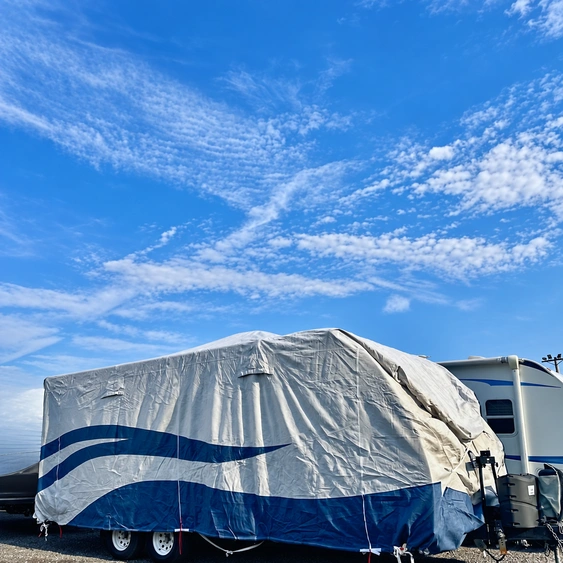
SHOULD YOU COVER YOUR TRAVEL TRAILER DURING THE WINTER?
Winter is approaching, camping season is over, and your travel trailer is ready to be stored. One final question remains: should you cover it?
A properly designed winter cover can protect your travel trailer from dirt, UV rays, and harsh weather. However, it must be breathable, properly fitted, and correctly installed. A cover that is too large, poorly secured, or not designed for recreational vehicles can trap moisture, rub against the exterior, and cause damage.
The decision is therefore not simply whether to cover your RV. The most important thing is to choose the right protection and use it properly.
IS IT NECESSARY TO COVER A TRAVEL TRAILER DURING THE WINTER?
A cover is especially useful when a travel trailer is stored outdoors for several months.
It may be beneficial when the travel trailer:
-
is exposed to sunlight, wind, snow, or freezing rain;
-
is parked under trees;
-
may accumulate dust, sap, leaves, or other debris;
-
is not protected by a permanent shelter;
-
remains unused for an extended period.
A cover does not replace complete RV winterization, sealant inspections, or a stable, well-drained storage location. You should also consult your owner’s manual, as recommendations may vary depending on the manufacturer and model.
RV COVER OR REGULAR TARP: WHAT IS THE DIFFERENCE?
Not every type of covering is suitable for the long-term storage of a recreational vehicle.
A COVER DESIGNED FOR RVS
A travel trailer cover is designed to fit the shape of the vehicle while allowing moisture to escape. Depending on the product, it may include:
-
breathable panels;
-
securing straps;
-
reinforced sections in vulnerable areas;
-
zippered panels providing access to the entrance door;
-
UV protection;
-
different sizes designed for various types of RVs.
A REGULAR TARP
A universal tarp is generally less expensive, but it is rarely designed to fit the shape of a travel trailer. When exposed to wind, it may shift, rub against the exterior, and damage the finish.
A non-breathable tarp can also trap moisture and contribute to condensation, unpleasant odours, and the deterioration of certain materials. Its grommets and ropes may also strike the sidewalls.
For long-term storage, a breathable cover designed specifically for recreational vehicles is therefore more suitable than a standard tarp.
WHAT ARE THE BENEFITS OF A WINTER RV COVER?
When properly selected and installed, an RV cover can offer several benefits.
PROTECTING THE EXTERIOR FINISH
Extended exposure to sunlight can fade colours and accelerate the aging of certain materials. Even during winter, UV rays can affect the exterior finish, seals, and other components.
LIMITING THE BUILDUP OF DIRT
A cover reduces direct contact with dust, leaves, tree sap, and other debris. This can make spring cleaning and inspection easier.
REDUCING EXPOSURE TO HARSH WEATHER
A high-quality cover that is properly fitted and installed provides effective protection against rain, snow, ice, and other weather conditions. By limiting direct contact with the roof and exterior, it helps preserve seals and sealants while reducing the risk of water infiltration and premature deterioration.
For optimal protection throughout the winter, seals and sealants should still be inspected before storage and repaired when cracks or signs of wear are found. The cover strengthens the vehicle’s overall protection and helps extend the life of its exterior components.
MAKING SPRING PREPARATION EASIER
A properly prepared and protected travel trailer will generally be easier to clean and inspect when camping season returns.
CAN A COVER DAMAGE A TRAVEL TRAILER?
Yes. An unsuitable or improperly installed cover can cause damage.
The main risks include:
-
rubbing against the paint or exterior finish;
-
moisture trapped beneath non-breathable material;
-
loose straps striking the exterior;
-
tears caused by sharp corners or protruding accessories;
-
water, snow, or ice accumulating in sagging sections;
-
blocked openings that need to remain ventilated.
These problems are more likely to occur when the cover is too large, too loose, or made from material that is not suitable for long-term storage.
A properly fitted cover should limit movement without placing excessive pressure on the vehicle’s corners or accessories.
HOW DO YOU CHOOSE THE RIGHT COVER FOR YOUR TRAVEL TRAILER?
Choosing a cover should not be based solely on the approximate length of the RV.
Before purchasing one, check:
-
the type of recreational vehicle;
-
its actual length;
-
its width and height;
-
the location of the air conditioner;
-
the presence of an antenna, rack, or other accessory;
-
the breathability of the material;
-
its resistance to UV rays;
-
its securing system;
-
the travel trailer manufacturer’s recommendations.
Always measure the vehicle according to the cover manufacturer’s instructions. Depending on the product, certain accessories may need to be included in or excluded from the measurements.
A cover that is too small may tear or place excessive pressure on the vehicle. A cover that is too large may flap in the wind and damage the surface it is intended to protect.
Need assistance? The Roulottes Rémillard Parts and Accessories team can help you select a cover that is compatible with your vehicle.
HOW SHOULD YOU PREPARE YOUR TRAVEL TRAILER BEFORE INSTALLING THE COVER?
The cover should only be installed on a clean, dry, and inspected travel trailer.
Before getting started:
-
Clean the exterior and allow it to dry completely.
-
Inspect the roof, windows, seals, and sealants.
-
Complete any necessary repairs.
-
Close all windows, doors, and storage compartments.
-
Retract the slide-outs and awnings.
-
Remove or lower detachable accessories when recommended.
-
Protect corners, gutters, and protruding components.
-
Make sure nothing could puncture the cover.
Covering a travel trailer while it is still wet may trap moisture underneath. A cover should also never be used to conceal a leak or damaged sealant.
HOW DO YOU PROPERLY INSTALL A WINTER RV COVER?
Depending on the size of the travel trailer, the cover should ideally be installed by at least two people.
First, unfold the cover on a clean surface and determine its proper orientation. Gradually position it over the travel trailer without dragging it against corners or accessories. Once the vehicle is covered, adjust the straps and panels evenly.
During installation:
-
follow the instructions provided with the cover;
-
avoid walking on a roof that is not designed to support foot traffic;
-
do not leave any straps loose;
-
protect sensitive contact points;
-
make sure the fasteners do not rub against the exterior;
-
maintain any necessary ventilation openings;
-
do not overtighten the straps or create excessive tension.
The goal is to obtain stable protection without large loose sections or excessive pressure points.
SHOULD YOU CHECK THE COVER DURING THE WINTER?
Yes. A cover should not be installed in the fall and then completely forgotten until spring.
Inspect it periodically, especially after:
-
a storm;
-
strong winds;
-
significant snowfall;
-
freezing rain;
-
a winter thaw;
-
a major change in temperature.
Check the straps, tears, friction points, and any buildup of snow or ice. Also inspect the ground around the travel trailer for standing water or signs that the vehicle has shifted.
Never attempt to climb onto a snowy or icy roof. If work at height is required, consult the manufacturer’s recommendations or contact a professional.
DOES A COVER REPLACE WINTER MAINTENANCE?
No. A cover is an additional layer of protection.
Before storage, you should also:
-
winterize the plumbing system;
-
inspect and repair seals and sealants;
-
shut off the propane supply;
-
clean and empty the interior;
-
prevent rodents from entering;
-
choose a stable, well-drained location.
PREPARING THE BATTERY
Disconnect the battery to prevent appliances and other equipment from continuing to draw power. Depending on the battery type and the manufacturer’s recommendations, remove it and store it in a dry, temperature-controlled location, or keep it charged with a compatible battery maintainer.
Check its state of charge periodically. A discharged battery is more likely to be damaged during the winter.
CHECKING THE TIRES
Inspect the tires for cracks, deformation, or unusual wear. Adjust their pressure according to the vehicle and tire manufacturers’ recommendations, and protect them from sunlight with UV-resistant tire covers.
When appropriate, place a clean, durable barrier between the tires and the ground. Before returning to the road in the spring, inspect the tires again and check their pressure.
To make this preparation easier, learn more about the winterization and de-winterization services offered by Roulottes Rémillard.
Roulottes Rémillard also offers outdoor travel trailer storage that can be combined with an inspection, maintenance, or professional winterization. Contact our team for more information.
FREQUENTLY ASKED QUESTIONS ABOUT WINTER RV COVERS
CAN YOU USE A REGULAR BLUE TARP?
It is generally not recommended for long-term storage. A universal tarp can trap moisture, move in the wind, and rub against the exterior. A breathable cover designed for recreational vehicles provides more suitable protection.
DOES THE COVER NEED TO BE COMPLETELY WATERPROOF?
A good cover should resist precipitation while allowing moisture underneath it to escape. A waterproof but non-breathable material can trap condensation against the travel trailer.
Look for a weather-resistant, breathable cover that fits the vehicle properly and can be securely fastened.
CAN YOU INSTALL A COVER ON A WET TRAVEL TRAILER?
It is best to wait until the travel trailer is clean and completely dry. Otherwise, moisture could remain trapped beneath the cover.
DOES A COVER PROTECT AGAINST WATER INFILTRATION?
Yes. A high-quality winter cover helps reduce the risk of water infiltration by protecting the roof, seals, and sidewalls from direct exposure to rain, snow, and ice.
For the best possible protection, the cover must be breathable, properly fitted, and correctly installed. Seals and sealants should also be inspected before winter, since the cover works together with the vehicle’s existing weatherproofing.
SHOULD YOU REMOVE THE COVER AFTER A STORM?
Not automatically. However, you should inspect its condition, fasteners, and any accumulation of snow or ice. Always follow the cover manufacturer’s instructions and avoid any unsafe work at height.
PROTECT YOUR TRAVEL TRAILER WITH THE RIGHT SOLUTION
Covering your travel trailer during the winter can be beneficial, especially when it is stored outdoors. To provide effective protection, the cover must be breathable, properly fitted, and correctly installed. It should also be combined with complete winterization and an inspection of the vehicle’s seals and sealants.
Since 1949, Roulottes Rémillard has helped recreational vehicle owners maintain, winterize, and store their RVs while offering suitable parts and accessories.
To choose a cover that is compatible with your travel trailer or plan its storage, contact our team.
Browse our recreational vehicle inventory
📞 450-348-3485
Toll-free: 1-877-388-3885
📍 1290 Saint-Luc Boulevard
Saint-Jean-sur-Richelieu, Quebec