
How to Store Your Travel Trailer for Winter in Quebec

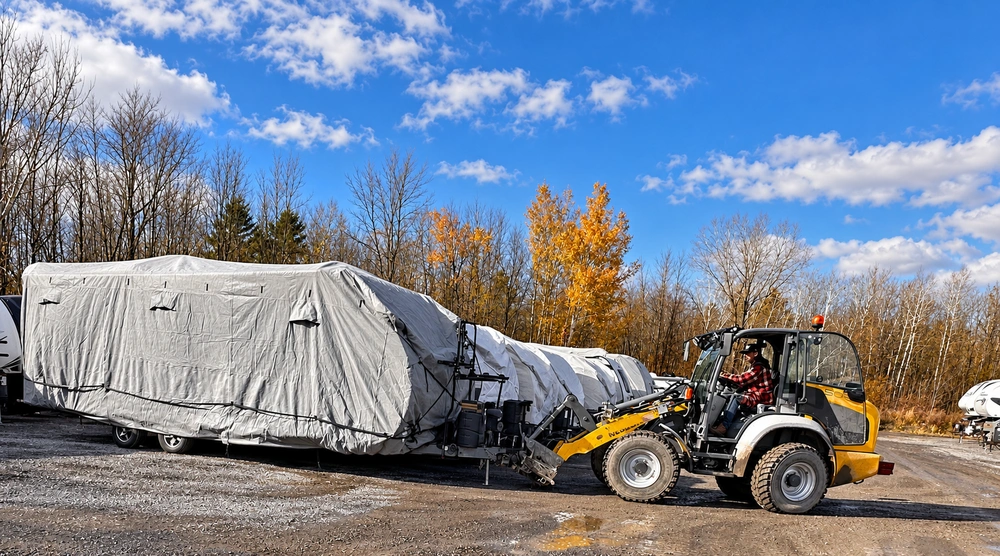
HOW TO STORE A TRAVEL TRAILER FOR THE WINTER IN QUEBEC
Quebec winters leave little room for improvisation. A travel trailer parked for several months will be exposed to freezing temperatures, snow, moisture, and significant temperature fluctuations. Without proper preparation, a small amount of water left in a pipe or a minor crack in a sealant can result in damage by spring.
Proper winter storage involves protecting the plumbing system from freezing, cleaning the interior, inspecting seals and sealants, preparing the battery and tires, and selecting a stable and secure storage location.
Here are the main steps to follow so that your recreational vehicle remains in good condition until camping season returns.
WINTERIZATION AND STORAGE: WHAT IS THE DIFFERENCE?
Winterization and winter storage are two different but complementary operations.
Winterizing a travel trailer primarily involves protecting its systems from freezing. This includes draining the water heater and plumbing lines and, when required, using non-toxic antifreeze designed for recreational vehicles.
Winter storage refers to the location and conditions in which the travel trailer will remain throughout the winter. Factors such as drainage, moisture, tires, the battery, ventilation, security, and exterior protection must all be considered.
A travel trailer can therefore be properly winterized and still remain vulnerable if it is stored on poorly drained ground, has damaged sealants, or is not inspected during the winter.
1. WINTERIZE THE PLUMBING SYSTEM
The plumbing system is one of the most vulnerable parts of a travel trailer during the winter. When water freezes, it expands and can burst a pipe, crack a valve, or damage the water heater.
Complete winterization should take into account:
-
the fresh water tank;
-
the grey and black water tanks;
-
the water heater;
-
the plumbing lines and faucets;
-
the water pump;
-
the toilet;
-
the indoor and outdoor showers;
-
the ice maker;
-
the washing machine or dishwasher, if applicable.
Depending on the travel trailer and its equipment, the procedure may include adding non-toxic RV antifreeze or removing water from the system with compressed air.
Because the procedure varies from one vehicle to another, always consult the manufacturer’s manual or have the work completed by a qualified technician. A single overlooked pipe or appliance can be enough to cause damage.
Learn more about the winterization and de-winterization services offered by Roulottes Rémillard.
2. EMPTY AND THOROUGHLY CLEAN THE TRAVEL TRAILER
Before closing your travel trailer for several months, remove all food, beverages, and products that could freeze, leak, or attract rodents.
Thoroughly clean:
-
the refrigerator and freezer;
-
cabinets and drawers;
-
countertops and cooking surfaces;
-
the bathroom;
-
the floors;
-
the spaces underneath furniture;
-
storage compartments.
Once cleaning is complete, leave the refrigerator and freezer doors slightly open to promote airflow and prevent unpleasant odours.
Also remove valuables and items that may be damaged by cold or moisture, including certain electronic devices, medications, aerosol products, batteries, and damp fabrics.
3. INSPECT THE ROOF, SEALS, AND SEALANTS
A small crack around a window, vent, or trim piece can allow water to enter during freeze-and-thaw cycles. Over time, water infiltration can damage the insulation, walls, ceiling, or flooring.
Before storage, carefully inspect:
-
roof seams;
-
the areas around doors and windows;
-
vents;
-
the air conditioner;
-
skylights;
-
trim and corners;
-
cable entry points;
-
exterior compartments.
Look for cracks, separation, gaps, and other signs of deterioration. If repairs are required, only use a sealant that is compatible with the travel trailer’s materials and approved by its manufacturer.
A pre-winter inspection allows vulnerable areas to be corrected before they remain exposed for several months. The Roulottes Rémillard service department can perform this inspection as part of your travel trailer’s maintenance.
4. REMOVE AND STORE THE BATTERY
Before winter storage, the battery must be disconnected and removed from the travel trailer. Cold temperatures, extended inactivity, and small electrical loads can discharge the battery and shorten its service life.
Follow these steps:
-
Turn off all appliances and electrical systems.
-
Shut off the power using the battery disconnect switch, if the travel trailer has one.
-
Disconnect the negative terminal first, followed by the positive terminal.
-
Remove the battery from the travel trailer.
-
Clean the terminals if you notice any corrosion.
-
Store the battery in a dry, temperature-controlled location protected from freezing.
-
Check its charge level regularly.
-
Recharge it when necessary using a charger that is compatible with the battery type.
The battery should not remain in the travel trailer during the winter. Before reinstalling it in the spring, check its condition, charge level, and terminal cleanliness.
5. INSPECT THE TIRES AND STABILIZE THE TRAVEL TRAILER
A travel trailer that remains stationary for several months places constant pressure on the same areas of its tires. Before storage, inspect them for cracks, deformation, and uneven wear, then adjust the tire pressure according to the manufacturer’s recommendations.
To protect the tires and keep the travel trailer securely positioned:
-
choose a firm, level, and well-drained surface;
-
avoid mud and areas where water accumulates;
-
use suitable wheel chocks;
-
place a clean, durable barrier between the tires and the ground when recommended;
-
protect the tires from UV rays with tire covers;
-
follow the manufacturer’s instructions concerning stabilizers;
-
periodically verify that the travel trailer remains properly positioned.
Stabilizers are primarily designed to reduce vehicle movement. They are generally not intended to lift the travel trailer or support its full weight on their own. Only use them according to the manufacturer’s instructions.
6. CONTROL MOISTURE AND MAINTAIN PROPER VENTILATION
Moisture trapped inside a travel trailer can cause condensation, unpleasant odours, and, in some cases, mould.
Before closing the vehicle:
-
make sure all surfaces are clean and dry;
-
remove damp towels, clothing, and fabrics;
-
verify that there are no leaks;
-
use a moisture absorber designed for an unoccupied space, if needed;
-
follow the manufacturer’s ventilation recommendations;
-
position mattresses and cushions to promote airflow.
Inspect the travel trailer a few times throughout the winter, particularly after heavy precipitation, a thaw, or a significant temperature change.
7. PREVENT RODENTS FROM ENTERING
When cold weather arrives, rodents look for dry and sheltered spaces. A travel trailer can become an attractive shelter when it contains food or has easily accessible openings.
To reduce the risk:
-
remove all food;
-
clean up crumbs and residue;
-
inspect underneath the travel trailer;
-
examine exterior compartments;
-
locate openings around pipes and cables;
-
seal only those openings that are not required for ventilation;
-
avoid leaving cardboard or fabrics on the floor.
Never block a ventilation outlet, exhaust duct, or opening required for the safe operation of an appliance.
8. PROTECT THE TRAVEL TRAILER WITH A SUITABLE COVER
A breathable cover designed for recreational vehicles provides effective protection against dirt, UV rays, rain, snow, and ice. By limiting direct contact with the roof and exterior, it also helps preserve seals, sealants, and the exterior finish.
To be effective, the cover must be the correct size, properly installed, and adequately ventilated.
A standard plastic tarp is not recommended for long-term storage. It may trap moisture, contribute to condensation, and rub against the exterior when it moves in the wind.
If you cover your travel trailer:
-
use a cover designed for recreational vehicles;
-
protect corners and protruding components;
-
secure all straps properly;
-
make sure the fasteners do not rub against the exterior;
-
do not block openings that must remain ventilated;
-
periodically inspect the cover and its fasteners.
A cover complements the vehicle’s protection, but it does not replace plumbing winterization or a sealant inspection.
To choose the right protection and avoid installation mistakes, read our article: Should You Cover Your Travel Trailer During the Winter?
The Roulottes Rémillard Parts and Accessories team can also help you choose a cover that is compatible with your vehicle.
9. MONITOR SNOW AND ICE ACCUMULATION
A significant accumulation of snow or ice can place additional weight on the roof and interfere with water drainage during a thaw.
After a major storm, visually inspect:
-
the accumulation on the roof;
-
the condition and fasteners of the cover;
-
vents and openings;
-
water or ice around the tires;
-
the stability of the travel trailer;
-
possible signs of water infiltration.
Avoid climbing onto a snowy or icy roof. The risk of falling is high, and some roofs are not designed to support a person’s weight.
If snow removal becomes necessary, consult the vehicle’s manual to determine the applicable limits and recommended method, or contact a professional.
10. CHOOSE A SUITABLE STORAGE LOCATION
A proper storage location should be stable, accessible, secure, and well drained.
Before reserving a space, check:
-
the property’s security measures;
-
access procedures and hours;
-
the length of the agreement;
-
maximum accepted vehicle dimensions;
-
insurance requirements;
-
the owner’s responsibilities;
-
available maintenance services;
-
the procedure for retrieving the vehicle in the spring.
If you store your travel trailer at home, also check your municipality’s regulations.
Roulottes Rémillard offers outdoor travel trailer storage in Saint-Jean-sur-Richelieu. Storage can be combined with winterization, a sealant inspection, or seasonal maintenance. Contact our team for more information.
CHECKLIST BEFORE STORING YOUR TRAVEL TRAILER
Before leaving your travel trailer in storage for the winter, make sure you have completed the following steps.
WINTERIZATION AND PLUMBING
-
Winterized the travel trailer.
-
Drained and cleaned the tanks.
-
Protected the plumbing lines, faucets, and appliances against freezing.
-
Used the method and antifreeze recommended for your RV.
-
Closed the propane cylinders.
INTERIOR
-
Removed food and products that may be damaged by freezing.
-
Cleaned and dried the interior.
-
Left the refrigerator and freezer doors slightly open.
-
Removed valuables.
-
Reduced the risk of rodent intrusion.
EXTERIOR AND COMPONENTS
-
Inspected the roof, seals, and sealants.
-
Removed the battery.
-
Checked the condition and pressure of the tires.
-
Installed a suitable cover, if applicable.
-
Selected a stable and well-drained surface.
FREQUENTLY ASKED QUESTIONS ABOUT WINTER STORAGE
WHEN SHOULD YOU PREPARE YOUR TRAVEL TRAILER FOR WINTER?
The travel trailer must be winterized before temperatures fall below freezing. It is best not to wait until the first expected frost, especially if water remains in the plumbing lines, tanks, or appliances.
CAN YOU LEAVE THE BATTERY IN THE TRAVEL TRAILER?
No. For winter storage, the battery must be disconnected and removed from the travel trailer. It should then be stored in a dry, temperature-controlled location protected from freezing.
Check its charge level periodically and recharge it when necessary with a compatible charger. Before reinstalling it in the spring, inspect its condition and clean the terminals if needed.
IS A WINTER RV COVER NECESSARY?
A breathable cover designed for recreational vehicles is recommended when a travel trailer remains outdoors. It protects the roof, sidewalls, seals, and finish against direct exposure to dirt and harsh weather.
To be effective, the cover must be the correct size, breathable, and properly installed. Read our complete guide to winter RV covers to learn more.
SHOULD YOU REMOVE SNOW FROM A TRAVEL TRAILER ROOF?
Significant snow accumulation should be monitored. CAA-Quebec recommends taking action when the accumulation reaches approximately 30 centimetres, although the appropriate method depends on the vehicle and roof type.
Climbing onto a snowy or icy roof is dangerous. Consult the travel trailer’s manual or contact a professional before attempting to remove snow.
WHAT IS THE MOST IMPORTANT STEP?
Protecting the plumbing system against freezing remains the priority. Inspecting the sealants, protecting the tires, and selecting a well-drained storage location are also necessary for proper winter storage.
PREPARE YOUR TRAVEL TRAILER BEFORE FREEZING WEATHER ARRIVES
Properly storing a travel trailer requires preparation, but these precautions help prevent damage and simplify its return to service in the spring.
Since 1949, Roulottes Rémillard has helped recreational vehicle owners maintain, winterize, and store their travel trailers.
Need help preparing your RV? Contact our team or call us at 450-348-3485. We can answer your questions and schedule the services that are right for your vehicle.
Browse our recreational vehicle inventory
📞 450-348-3485
Toll-free: 1-877-388-3885
📍 1290 Saint-Luc Boulevard
Saint-Jean-sur-Richelieu, Quebec